
Texas Trucking Laws and Compliance Guide
Texas trucking compliance is a combination of federal requirements and Texas-specific rules. Federal rules administered by the Federal Motor Carrier Safety Administration (FMCSA) cover areas such as hours of service, electronic logging devices, driver and carrier requirements, drug and alcohol compliance, and federal insurance requirements. Texas adds its own requirements for motor-carrier registration, size and weight, permits, inspections, and fuel-tax administration.
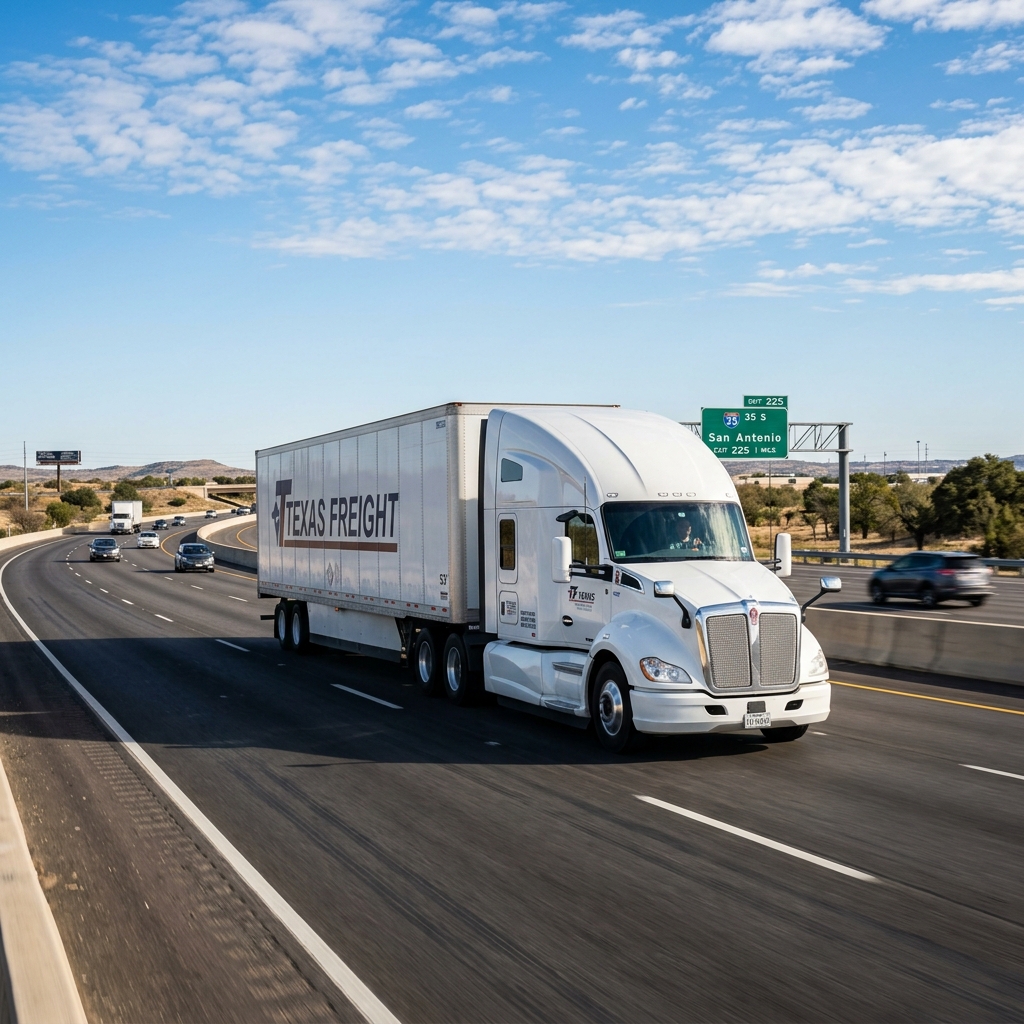
For a Texas carrier, compliance also affects dispatch. A load that looks profitable may not be workable if the truck lacks the required hours, exceeds legal weight or dimensions, needs a permit, or cannot legally follow the proposed route. To partner with a dispatcher who prioritizes compliance, you can review Bonafide's best dispatch service in Texas.
Request Consultation
Confirm operating authority requirements with our coordinators.
⚖ Disclaimer:
This guide provides general factual information about federal and Texas trucking requirements. It is not legal advice. Requirements can depend on the carrier, vehicle, cargo, operating authority, route, and specific circumstances. Verify current requirements with the applicable government agency before operating.
Federal Trucking Rules That Apply in Texas
A Texas-based carrier operating in interstate commerce can be subject to federal motor-carrier regulations administered by FMCSA.
USDOT numbers and federal registration
A USDOT number is a federal identification number used by FMCSA to identify and monitor certain motor carriers. FMCSA says a carrier generally needs a USDOT number when operating a qualifying commercial motor vehicle in interstate commerce (vehicles weighing 10,001+ lbs, certain passenger CMVs, or placarded hazmat loads). Texas also requires USDOT numbers for certain intrastate commercial carriers under applicable conditions.
Whether a carrier needs federal operating authority depends on the type of transportation it performs. First-time registration is now handled through FMCSA's newer registration system, Motus, which began replacing the legacy registration systems in May 2026.
Hours of service (HOS)
Hours of service limit when a commercial driver can drive and work. For property-carrying drivers, the general federal rules include:
| Rule | General requirement |
|---|---|
| Driving limit | Up to 11 hours after 10 consecutive hours off duty |
| 14-hour limit | Driving generally cannot continue after the 14th consecutive hour after coming on duty |
| 30-minute break | Generally required after 8 cumulative hours of driving |
| 60/70-hour limit | 60 hours in 7 days or 70 hours in 8 days, depending on schedule |
A dispatcher should not book a load based solely on distance and rate. The carrier also needs to know whether the driver has enough legal driving and on-duty time to complete the movement. FMCSA is also conducting limited 2026 pilot programs examining alternative sleeper-berth and split-duty arrangements, which do not mean the general HOS rules have been replaced.
Electronic logging devices (ELD)
An electronic logging device (ELD) records a driver's duty status for operations subject to the federal ELD requirement. Exceptions apply, such as drivers required to prepare records of duty status no more than 8 days in any 30-day period.
⚠️ 2026 development: FMCSA removed 10 ELD devices from its registered-device list on July 9, 2026. Carriers using those devices must replace them with registered compliant devices before September 8, 2026.
Drug & alcohol compliance
The FMCSA Drug & Alcohol Clearinghouse is a federal database used to check whether CDL drivers have unresolved violations. Employers must conduct a pre-employment query when hiring a driver and conduct queries at least annually. Owner-operators must designate a consortium/third-party administrator where required.
Federal insurance requirements
Federal insurance requirements vary by entity, cargo, vehicle, and operation. FMCSA's current insurance table shows a $750,000 BIPD minimum for for-hire property carriers operating non-hazardous property with vehicles having a GVWR of 10,001+ lbs, subject to the applicable federal requirements. Hazardous materials or specialized loads have different minimum thresholds.
Texas-Specific Trucking Requirements
Federal compliance is only one side of operating a truck in Texas. The Texas Department of Motor Vehicles (TxDMV) and the Texas Comptroller of Public Accounts administer state-specific programs.
• Texas motor-carrier registration (TxDMV number): Required for intrastate commercial motor vehicles or combinations exceeding 26,000 pounds, passenger vehicles, school buses, or vehicles transporting placardable hazardous materials.
• Intrastate and interstate authority are different: A carrier performing both interstate and intrastate operations may need both applicable types of authority. Do not assume that operating from a Texas address automatically determines whether an operation is interstate or intrastate.
2026 TxMCCS Registration Transition:
Texas launched a major system upgrade on August 3, 2026: TxMCCS—the Texas Motor Carrier Credentialing System—replaced both MCCS and eLINC. It is now the primary online portal for motor-carrier credentials and account management. Carriers handling Texas credentials should use the new system.
Texas Size, Weight and Oversize/Overweight Rules
Size and weight requirements can affect a load before the truck ever leaves the shipper.
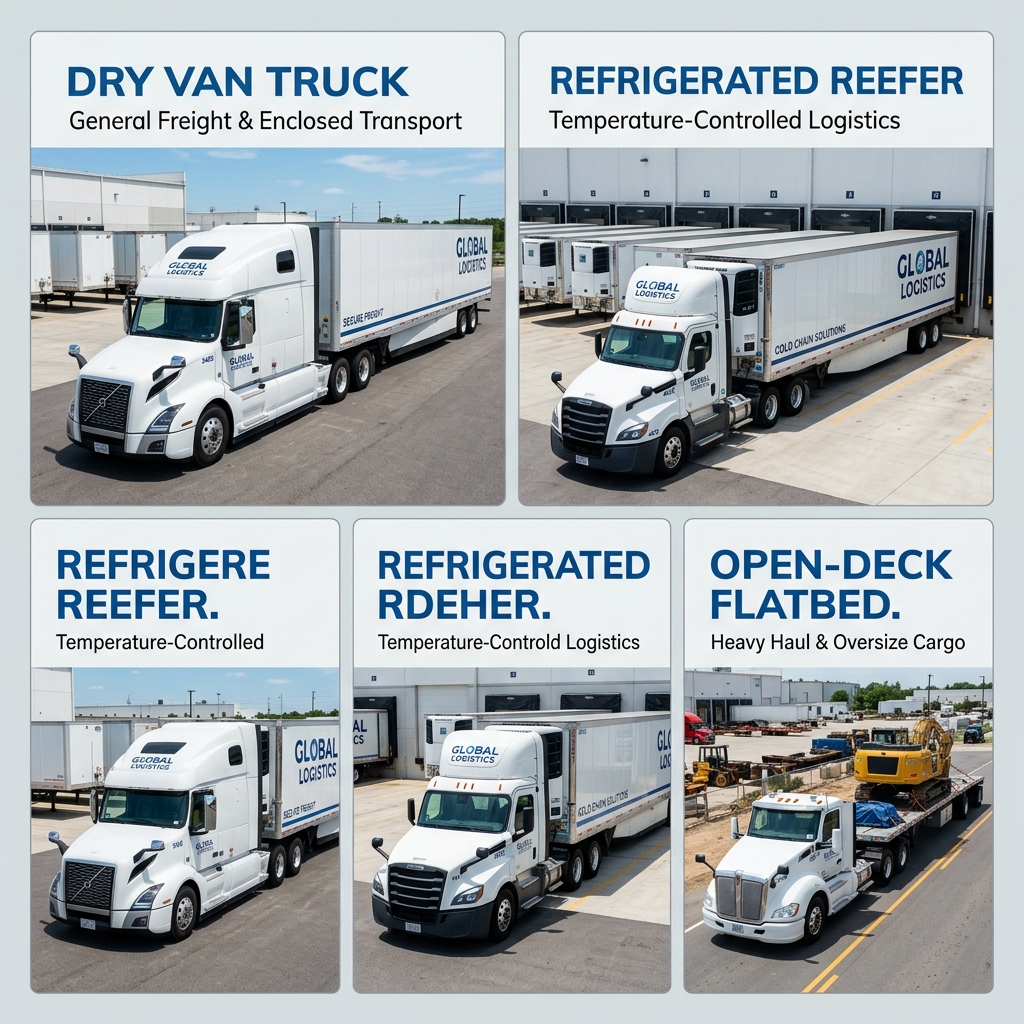
Standard Texas size and weight limits (without permits):
- • Width: 8 feet 6 inches maximum for most vehicles and loads.
- • Height: 14 feet maximum.
- • Length: Specific limits depending on vehicle configuration.
- • Gross Weight: 80,000 pounds maximum. Axle and axle-group spacing limits apply (permissible weight table).
If a vehicle or load exceeds legal size or weight limits, an oversize/overweight (OS/OW) permit and authorized route from TxDMV may be required. This is especially important for flatbed, step deck, lowboy, and heavy equipment operations. A dispatcher should not treat "the shipper says it's legal" as a substitute for verifying actual dimensions and axle spacing.
IRP, IFTA and Fuel-Tax Requirements
International Registration Plan (IRP): Apportioned registration for qualifying interstate commercial vehicles is administered through TxDMV.
International Fuel Tax Agreement (IFTA): Consolidated fuel tax reporting is administered through the Texas Comptroller. Texas also permits certain commercial vehicles entering the state to use a fuel trip permit instead of IFTA. The Comptroller states a vehicle may use the trip-permit option when entering Texas no more than 5 times in a calendar year.
Commercial Vehicle Inspections and Safety Compliance
Texas commercial carriers must meet vehicle inspection and safety obligations. A truck should be operationally ready before a load is accepted. FMCSA also maintains public safety ratings and carrier licensing information through its safety systems (CSA).
What Compliance Means for Dispatch and Load Booking
A dispatcher does not replace the carrier's compliance responsibilities. But dispatch decisions can create compliance problems if important information is ignored.
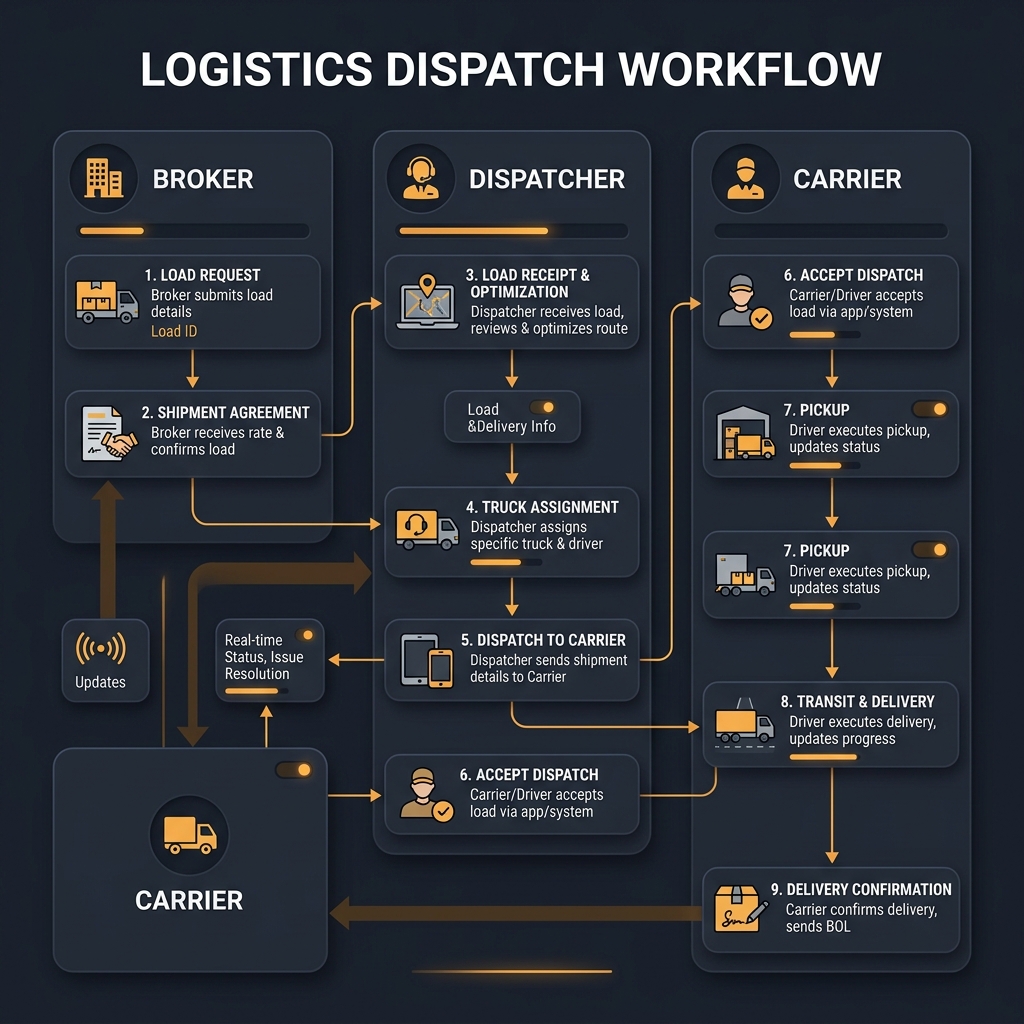
1. Check hours before accepting the load: Make sure the driver has enough legal HOS driving and on-duty time to legally complete the movement.
2. Check weight and dimensions: Obtain actual dimensions rather than generic descriptions to avoid axle-weight violations on Texas routes.
3. Confirm permit requirements: Know the permit routing and conditions before the truck moves. A permitted load is tied to a specific authorized route.
4. Recheck when the load changes: If the shipper changes weight, dimensions, commodity, or destination, the carrier must reassess compliance before proceeding.
Federal Rules, Texas Rules and Industry Practice
| Area | Federal rule | Texas rule | Common practice |
|---|---|---|---|
| USDOT | FMCSA requirements | Texas may require USDOT for intrastate | Keep registration current |
| HOS / ELD | Federal rules and exceptions | State rules apply in-state | Check hours before booking |
| Size & Weight | Interstate limits | TxDMV size and axle-weight rules | Verify weight and dimensions |
| OS/OW Permits | Federal boundaries | TxDMV single-trip and routing | Confirm permit before dispatch |
| IFTA / Fuel tax | Interstate framework | Texas Comptroller details | Keep detailed fuel records |
2026 Texas Compliance Changes to Know
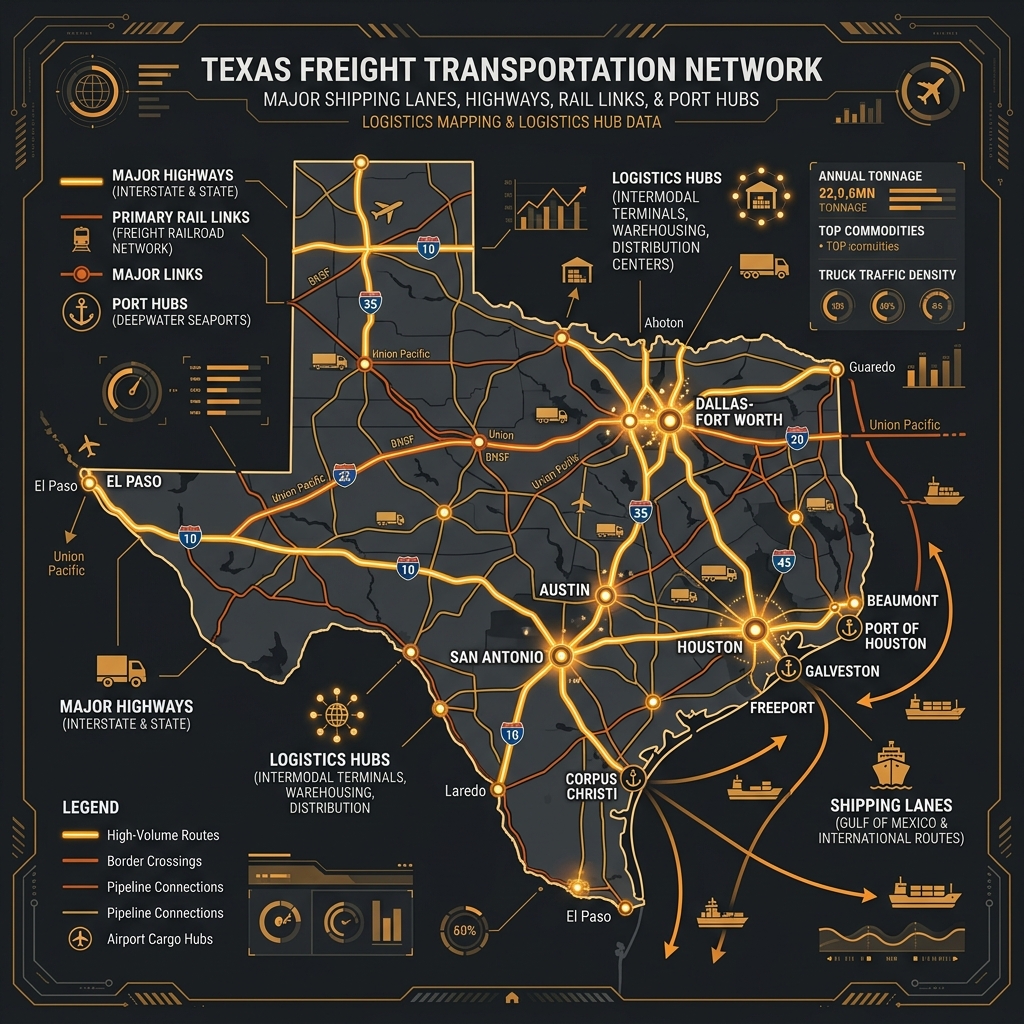
A Practical Texas Trucking Compliance Checklist
• Check USDOT, federal, and state registrations.
• Verify IRP apportioned registration & IFTA fuel tax credentials.
• Complete pre-employment Clearinghouse queries and maintain HOS/ELD logs.
• Confirm equipment dimensions, gross weight, and axle configuration.
• Obtain required OS/OW permits and check the authorized routing.
• Confirm HOS log availability for the scheduled transit time.
Compliance and Dispatch Work Together
A dispatcher can assist with freight search, broker communication, and route planning, but dispatch support should not be treated as a replacement for the carrier's own compliance obligations.
For a broader explanation, see the Complete Guide to Truck Dispatch Services in Texas. To apply HOS, deadhead, and load evaluation to daily operations, review our Texas Owner-Operator Dispatch Guide, or check out truck dispatch support for Texas carriers.
Frequently Asked Questions
Do Texas truckers need a USDOT number?
Many do, but the answer depends on the operation. FMCSA establishes federal USDOT requirements for qualifying interstate commercial motor vehicles, while Texas also requires USDOT numbers for certain intrastate commercial carriers.
Do Texas-only trucking companies need Texas motor-carrier registration?
Certain Texas intrastate commercial motor carriers must register with TxDMV. The requirement depends on factors including vehicle weight, hazardous materials and the type of operation.
What are the legal truck weight limits in Texas?
Texas generally lists an 80,000-pound gross maximum, but axle and axle-group limits also apply. A carrier cannot determine legality from gross weight alone.
When does a truck need an oversize or overweight permit in Texas?
A vehicle or load exceeding Texas's applicable legal size or weight limits generally needs an appropriate oversize or overweight permit and authorized route where required.
Does hiring a dispatcher transfer compliance responsibility to the dispatcher?
No general rule should be assumed to transfer the carrier's regulatory responsibilities simply because the carrier uses a dispatcher. The carrier should understand its obligations and the exact responsibilities assigned under its dispatch arrangement.