
How Truck Dispatch Services Work in Texas
A truck dispatch service helps a carrier handle some of the work involved in finding and coordinating freight. Depending on the provider and agreement, that can include searching for available loads, communicating with brokers, discussing load terms, and coordinating information around booked freight.
For a Texas carrier, the decision is less about simply finding "a dispatcher" and more about understanding what the dispatcher does, what remains your responsibility, what the service costs, and how the arrangement fits your equipment and operating preferences. To explore a verified full-service option first, check out Bonafide's best dispatch service in Texas.
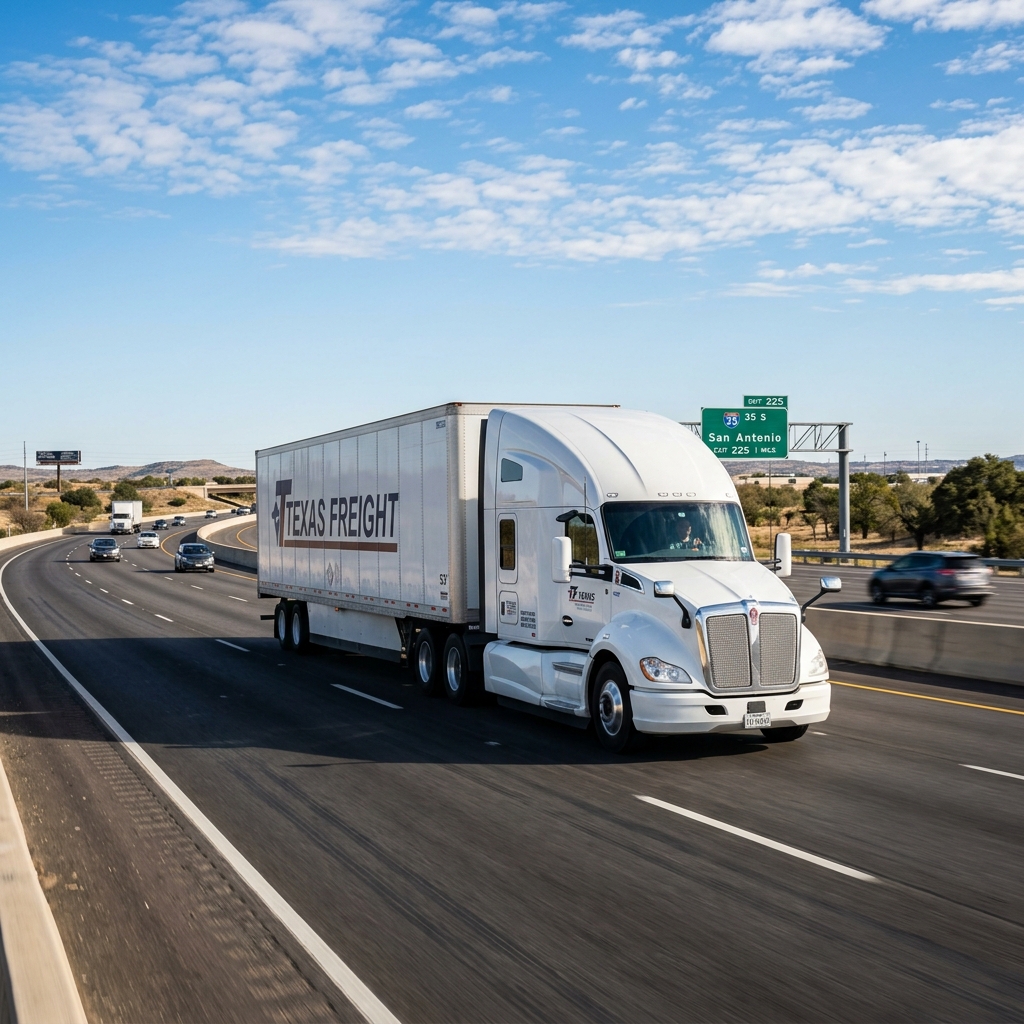
Texas is a particularly large and diverse freight environment. TxDOT's current freight planning addresses statewide freight assets, supply chains, international trade, freight operations, and future transportation needs.
Request Consultation
Discuss your dispatch strategy with our coordinators.
What Is a Truck Dispatch Service?
A truck dispatch service is a business that provides dispatch-related support to motor carriers. The exact services differ between providers, so a carrier should always establish what is included before entering an agreement.
At a practical level, dispatch support can help with work surrounding freight opportunities rather than physically operating the truck.
A typical dispatch relationship may involve:
- ✔ Identifying freight that fits a carrier's equipment and operating preferences.
- ✔ Communicating with brokers about potential loads.
- ✔ Discussing load details and, depending on the arrangement, negotiating terms.
- ✔ Coordinating information about pickup and delivery.
- ✔ Helping organize dispatch-related administrative work.
These functions are not universal requirements for every dispatch company. The actual scope depends on the provider and the agreement with the carrier. That distinction matters when comparing services. A dispatcher advertising "full service" may include different tasks from another provider using the same phrase.
A dispatcher is also not automatically the same thing as a freight broker. FMCSA issued final regulatory guidance in June 2023 specifically addressing the definitions of brokers and bona bona fide agents and how those distinctions apply to dispatch services.
What Does a Truck Dispatcher Actually Do?
The easiest way to understand dispatch is to follow the work around a potential load.
1. Understand the carrier's operation
Before searching for suitable freight, a dispatcher needs to understand the carrier's operating situation. Important information can include equipment type, freight the carrier is prepared to haul, preferred operating area, destinations the carrier wants to serve or avoid, scheduling constraints, and other preferences.
For example, a reefer carrier and a dry-van carrier do not necessarily look for the same freight. A flatbed, hotshot, lowboy, or car-hauler operation has different equipment considerations again.
2. Search for potential freight
A dispatcher may search available freight for opportunities that fit the carrier's requirements. The objective should not simply be to find a load with a large gross amount. The carrier needs to consider the complete trip, including origin, delivery, loaded miles, deadhead, available driver hours, and equipment fit.
3. Communicate with brokers
When a potential load is found, communication with the broker may be part of the dispatch process. The parties may need to clarify commodity details, pickup/delivery locations, appointments, equipment configurations, weight, dimensions, rate, payment terms, and special instructions.
4. Review the load before accepting it
A high gross rate does not automatically make a load a good business decision. A carrier should consider the complete movement, including loaded miles, deadhead, fuel, time, destination, and the likelihood of finding suitable follow-on freight. This is especially important in a state as geographically large as Texas, where a load can move between very different freight markets.
5. Coordinate the trip
Once a load is accepted, the carrier still has to execute the transportation. Depending on the dispatch agreement, the dispatcher may assist with communicating load information or other administrative matters. The carrier remains responsible for operating the vehicle and complying with applicable requirements.
That distinction is important: hiring a dispatcher does not transfer the carrier's regulatory responsibilities to the dispatcher.
How Does the Dispatch Process Usually Work?
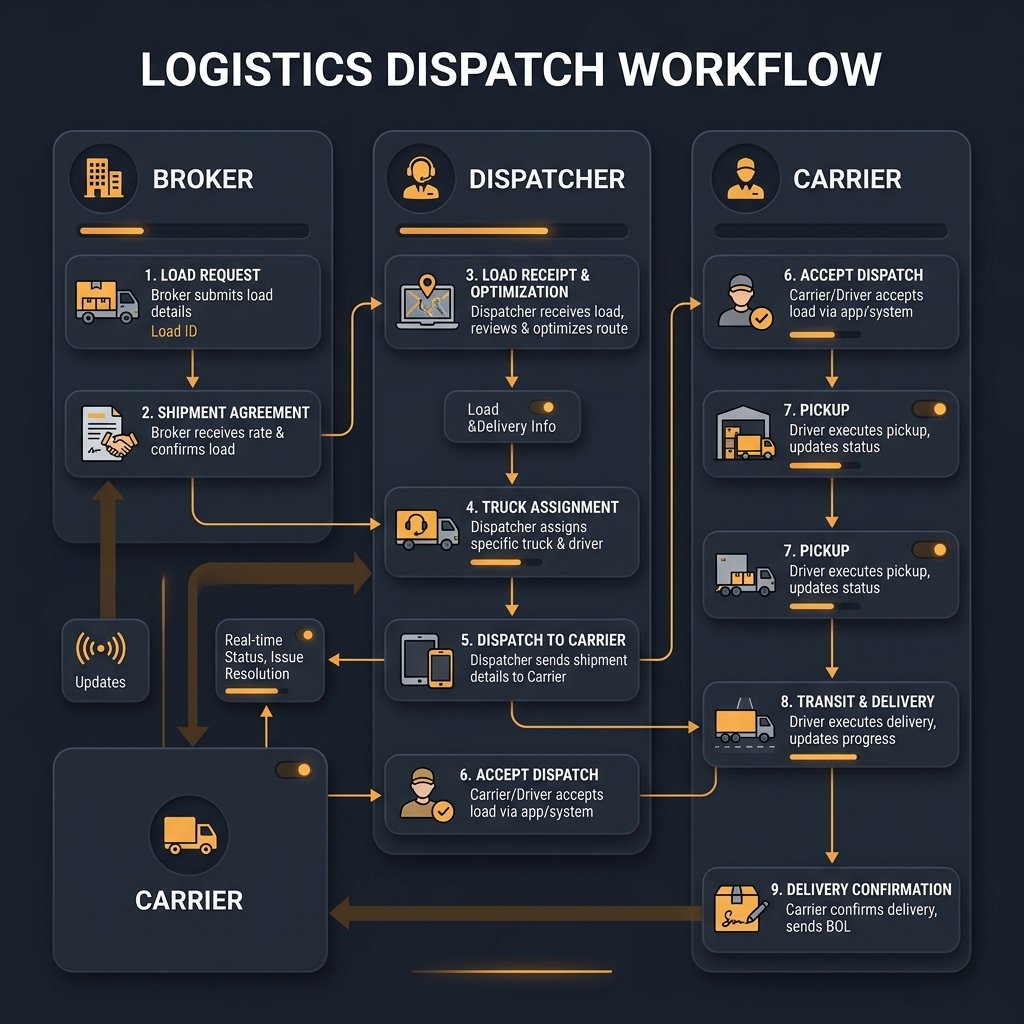
| Stage | What happens |
|---|---|
| Carrier requirements | The carrier establishes equipment, operating preferences, and freight requirements. |
| Freight search | Potential loads are identified that may fit those requirements. |
| Load evaluation | The carrier and/or dispatcher reviews the route, freight, timing, and commercial terms. |
| Broker communication | Load details and terms are discussed with the broker where applicable. |
| Load decision | The carrier follows its agreed process for deciding whether to accept the load. |
| Trip coordination | Pickup, delivery, and other load information are handled according to the agreement. |
| Delivery | The carrier completes the transportation and maintains the records required for its operation. |
The exact division of responsibilities should be established before the carrier starts working with a dispatcher. That is one reason the price alone is not enough when comparing dispatch services.
What Does a Dispatcher Not Take Off the Carrier?
A dispatcher can provide operational support, but the carrier does not stop being responsible for its trucking operation.
For property-carrying commercial motor vehicle operations, FMCSA's hours-of-service rules establish limits on driving and on-duty time. For example, the standard property-carrying rules include an 11-hour driving limit following 10 consecutive hours off duty and a 14-hour on-duty window. A dispatcher should therefore not be viewed as a substitute for the carrier's own compliance responsibilities.
The carrier remains responsible for:
- • Operating its vehicle safely.
- • Ensuring drivers comply with requirements.
- • Maintaining required records.
- • Understanding transportation obligations.
- • Making business decisions for its operation.
- • Ensuring equipment and drivers meet standards.
FMCSA describes its HOS rules as applying generally to carriers and drivers operating commercial motor vehicles, with the applicable requirements found in 49 CFR Part 395. The same principle applies to broker and dispatch relationships. FMCSA's 2023 guidance explains that whether activities fall within broker authority depends on the nature of the activities and the applicable definitions.
For more Texas-specific compliance information, see the Texas Trucking Laws and Compliance Guide.
Is a Truck Dispatcher the Same as a Freight Broker?
No. The terms describe different roles, and the distinction can have regulatory consequences. FMCSA issued final guidance in 2023 to clarify the definitions of broker and bona fide agent. The agency specifically noted that the guidance was intended to help regulated carriers determine whether they are working with entities that have broker authority and the associated financial responsibility.
| Truck dispatch service | Freight broker |
|---|---|
| Provides dispatch-related support to a carrier. | Arranges transportation between shippers and motor carriers when operating as a broker. |
| May assist a carrier with finding and communicating about freight. | Acts as a transportation intermediary subject to applicable broker requirements. |
| Exact activities depend on the relationship and agreement. | Broker authority requirements depend on the activities covered by federal rules. |
| Should be evaluated based on what the business actually does. | Should be evaluated for appropriate FMCSA registration and authority. |
Why Texas Freight Requires More Than a Generic Dispatch Strategy
Texas is not one uniform freight market. TxDOT is currently developing its 2027 Texas Freight Mobility Plan, examining freight transportation assets, current and future needs, critical supply chains, freight operations, and international trade.
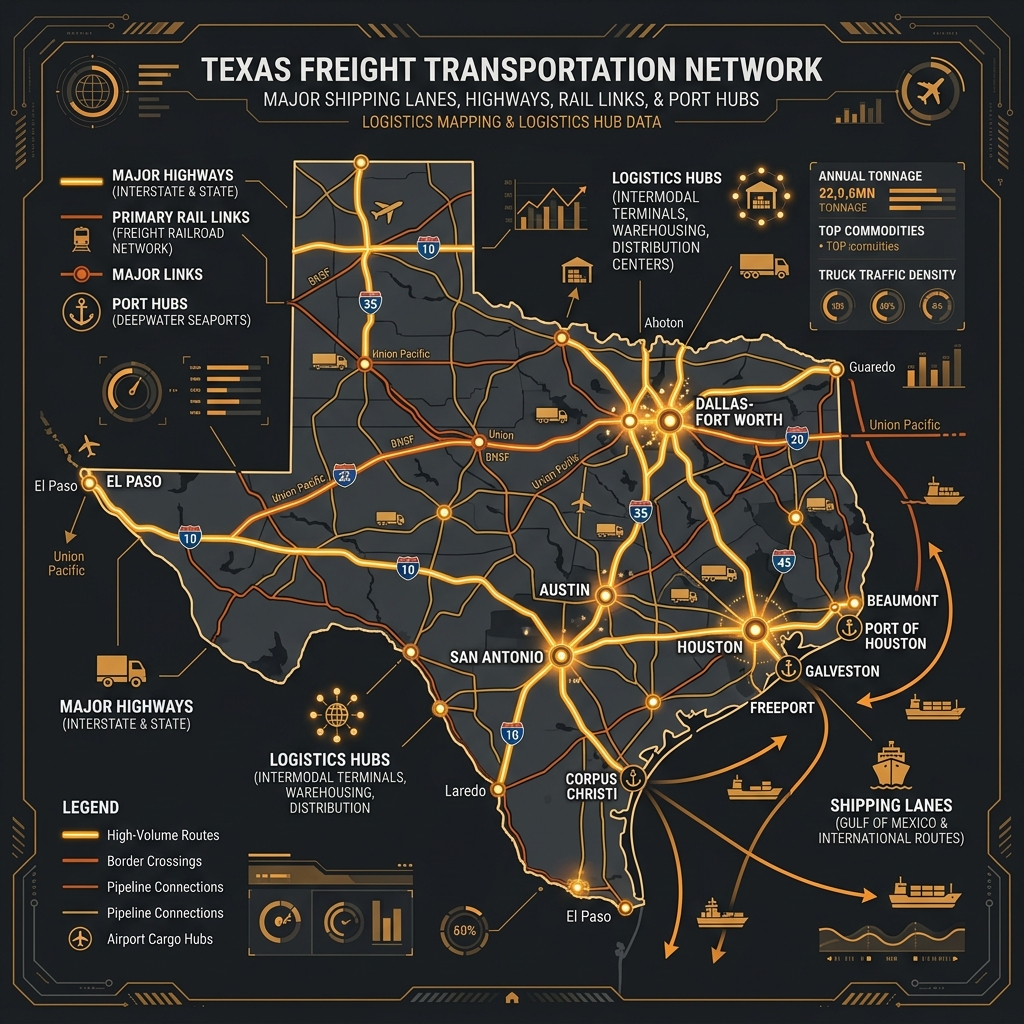
I-35: TxDOT's I-35 Texas Corridor Study covers the corridor from the Oklahoma state line to the Mexico border, studying parking, safety, and connectivity. It connects directly to Laredo, making it vital for border transport.
I-35, I-45 and I-10: TxDOT's Texas Connected Freight Corridors project focuses on an 865-mile network connecting Austin, Dallas-Fort Worth, Houston, and San Antonio.
I-10: TxDOT's study covers freight and passenger movement alongside congestion, connectivity, resiliency, safety, and operations.
For current Texas freight conditions, regional markets, and freight developments, see the Texas Freight Market Report.
What Equipment Can a Truck Dispatcher Handle?
Dispatch services differ in the equipment they support. Common equipment categories include dry van, reefer, flatbed, hotshot, box truck, power only, step deck, lowboy, and car hauler. Bonafide Trucking Solutions' locked dispatch-type context includes all nine of these equipment categories.
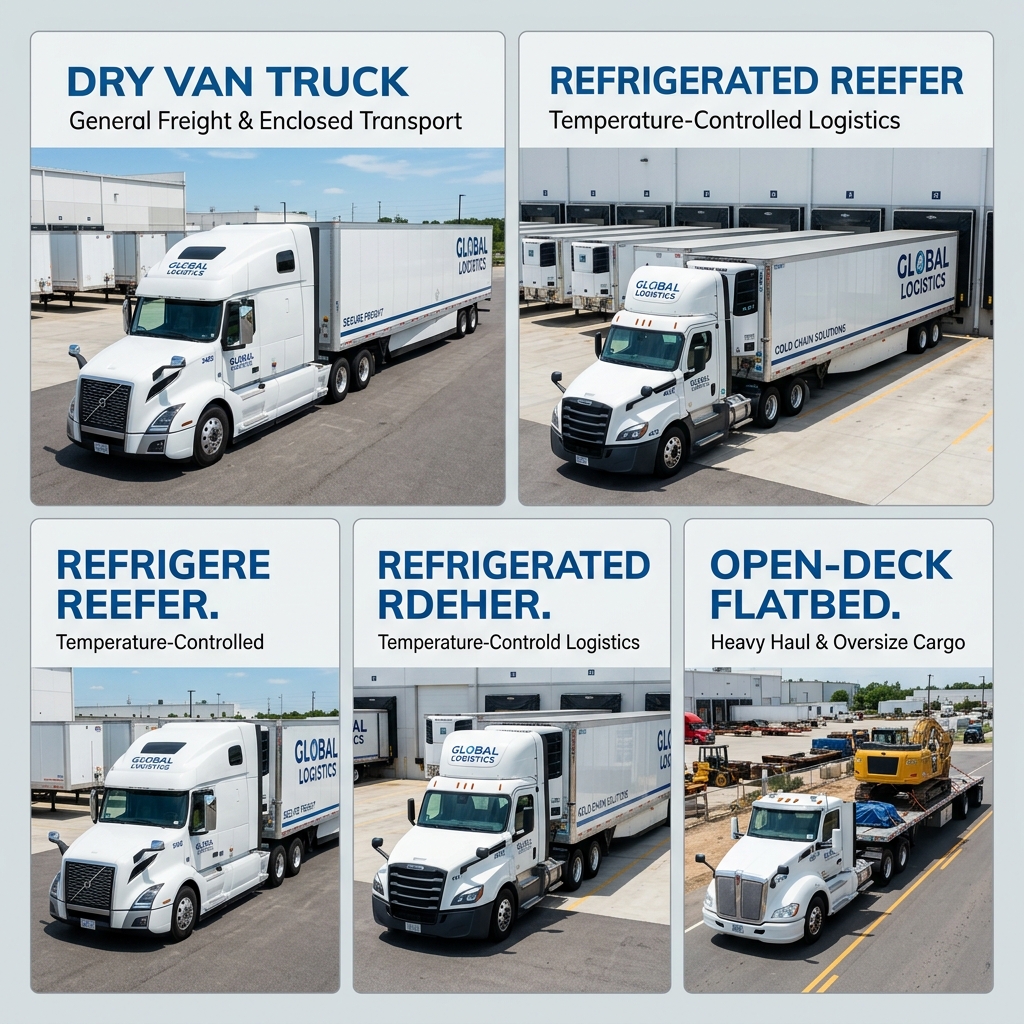
That does not mean every equipment type is available for every carrier or location. Before working with any dispatch service, explain exactly what equipment you operate and what freight you are prepared to haul.
How Much Does Truck Dispatch Cost?
There is no single universal dispatch price. Current dispatch providers use different pricing structures, including percentage-based arrangements and flat-fee models. Because the services included under those arrangements can also differ, comparing the percentage or dollar amount alone can be misleading.
Bonafide-specific pricing is not stated here because no verified Bonafide pricing information is included in the locked facts for this page. For a dedicated discussion of pricing structures, see Truck Dispatch Service Cost in Texas.
Self-Dispatch vs. Hiring a Dispatch Service
A carrier does not automatically need a third-party dispatcher. Self-dispatch means the carrier handles its own freight-search and dispatch-related work. A dispatch service delegates some of that work to another business.
- • You have the time to search for freight.
- • You are comfortable communicating with brokers.
- • You understand your preferred lanes and equipment.
- • You want to manage the process yourself.
- • You prefer not to pay an outside dispatch fee.
- • You want to delegate some dispatch-related work.
- • Sourcing and communicating takes time away from driving.
- • You prefer having outside support for dispatch tasks.
- • You want to establish a relationship with a dispatcher.
For a more focused comparison, see the Texas Owner-Operator Dispatch Guide.
How Should You Choose a Truck Dispatch Service?
Once you understand how dispatch works, compare providers based on the actual business relationship rather than a headline claim. Key points to evaluate include service scope, load selection control, pricing, written agreements, broker regulatory checks, and communication setup.
For a dedicated selection framework, see How to Choose a Truck Dispatch Service in Texas.
Common Misconceptions About Truck Dispatch
❌ “A dispatcher guarantees better rates.” No. Freight pricing depends on equipment, lane, market conditions, timing, and transaction details.
❌ “The highest-paying load is always the best load.” No. High-paying loads can have excessive deadhead, bad timing, or poor outbound lanes.
❌ “Hiring a dispatcher transfers my compliance responsibilities.” No. Federal and state HOS rules remain the motor carrier's and driver's responsibility.
❌ “Every dispatcher works the same way.” No. Providers differ in scope, pricing, equipment coverage, and agreements.
Is a Truck Dispatch Service Right for Your Texas Operation?
There is no universal answer. The right choice depends on your equipment, operating area, workload, and preferences. For Texas carriers who want to understand the subject before making a decision, the Texas Owner-Operator Dispatch Guide, Texas Trucking Statistics, and Texas Freight Market Report provide more specialized information.
If you have already decided that you want to evaluate a dispatch provider, you can also review Bonafide's truck dispatch service for Texas. Bonafide Trucking Solutions serves owner-operators, independent truckers, small fleets, and carrier businesses nationwide across the 48 contiguous states.
Frequently Asked Questions
Is a truck dispatcher the same as a freight broker?
No. FMCSA distinguishes brokers and bona fide agents, and its 2023 guidance addresses how those definitions apply to dispatch services. The regulatory treatment depends on the activities being performed.
Does a dispatcher choose my loads?
That depends on the dispatch arrangement. Before hiring a dispatcher, ask how potential loads are presented, who makes the final acceptance decision, and what the agreement says about load selection.
How much does a truck dispatch service cost?
Pricing varies by provider and may be percentage-based, flat-fee, or structured in another way. Compare the fee with the actual services included rather than comparing percentages alone.
Can I dispatch my own truck?
Yes. Self-dispatch is an option for carriers willing and able to handle their own freight-search, broker communication, and related dispatch work.
What should I check before hiring a dispatcher?
Understand the service scope, fee structure, contract, load-selection process, communication expectations, equipment experience, and the company's regulatory role.