
How to Choose a Truck Dispatch Service in Texas
Choosing a truck dispatch service is not just a matter of finding the lowest percentage or the company promising the most loads. A Texas carrier should evaluate the dispatcher's experience with its equipment, how loads are found and negotiated, who controls load acceptance, what the service actually includes, how pricing works, and what the contract says.
The safest approach is to evaluate the service before giving it control or access to important parts of your operation. The following process gives owner-operators and small fleets a practical way to do that. For a reference on what a professional service includes, you can review Bonafide's best dispatch service in Texas.

Request Onboarding Info
Evaluate your options with our logistics coordinators.
Start With What Your Trucking Operation Actually Needs
Before talking to dispatch companies, define what you expect the dispatcher to do. This prevents choosing a dispatcher based on a generic sales pitch before determining whether its service actually fits the operation.
• Equipment type operated
• Types of freight you are prepared to haul
• Number of trucks needing dispatch support
• Preferred geographic lanes or areas
• Avoided destinations or lanes
• Extent of delegated administrative tasks
• Carrier load-approval requirements
• Desired frequency of driver updates
For example, a single owner-operator may have very different requirements from a small fleet. A dry-van carrier may also need different dispatch knowledge from a reefer, flatbed, hotshot, step deck, lowboy, or car-hauler operation.
Bonafide Trucking Solutions' dispatch-type context includes dry van, reefer, flatbed, hotshot, box truck, power only, step deck, lowboy, and car hauler. Ask specifically about the equipment you actually operate.
1. Check Experience With Your Equipment and Lanes
Do not settle for an answer such as "We dispatch all types of trucks." Ask specific questions to find out how they approach your equipment.
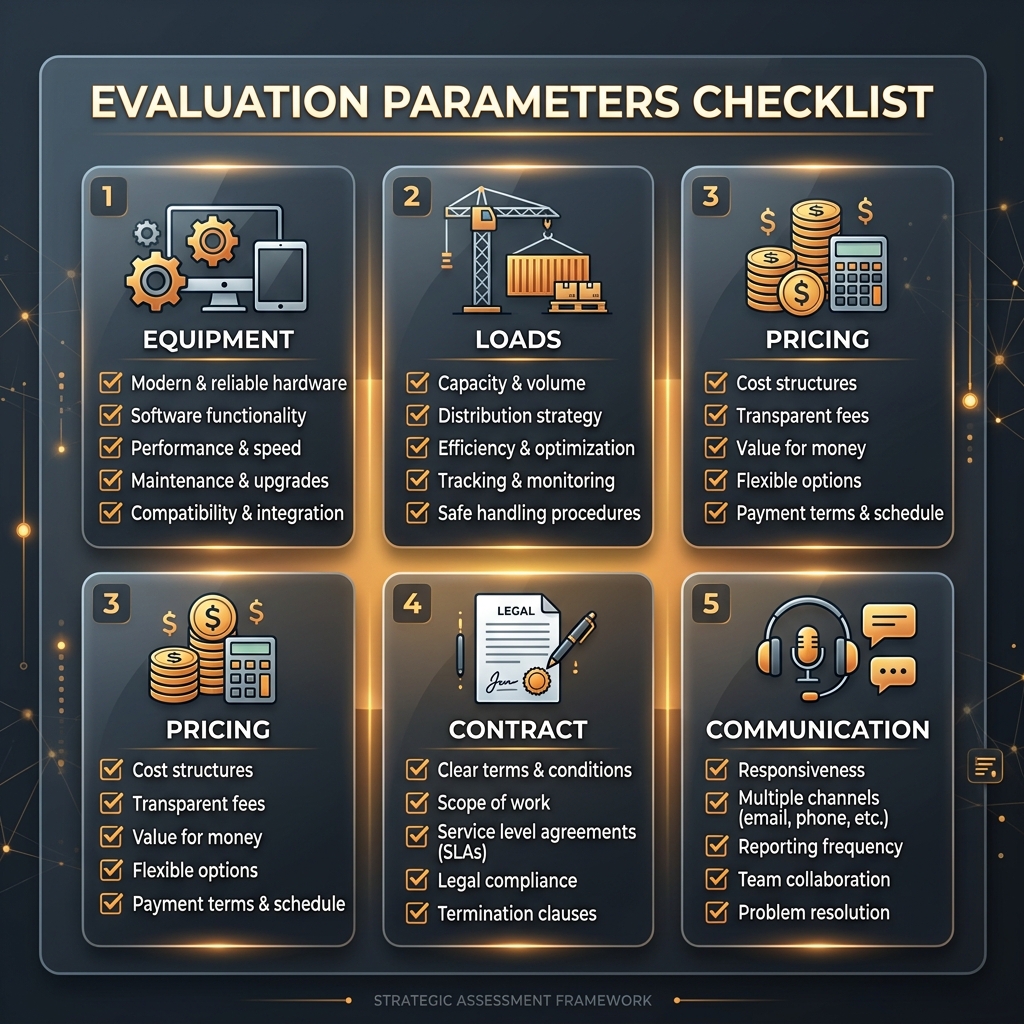
Specific questions to ask:
- • How much experience do you have with my equipment?
- • What types of freight do you normally handle for this equipment?
- • Which lanes do you regularly work?
- • Do you work with carriers operating in Texas?
- • How do you account for my preferred destinations?
- • What happens when I do not want a particular lane?
Equipment specialization is a recurring consideration in current dispatch-selection guidance. Current industry guides recommend asking whether a provider understands the carrier's specific equipment rather than accepting a generic claim of experience.
2. Find Out How the Dispatcher Finds and Evaluates Loads
A dispatcher having access to a load board is not, by itself, evidence of a good dispatch service. You need to understand how potential loads are selected.
Ask about load sources, filter procedures, deadhead planning, pickup and delivery times, destination reviews, and follow-on freight search.
A load that looks attractive based only on its gross amount may not make sense after considering empty miles, timing, destination, fuel, and the next available opportunity. This is particularly relevant for a Texas carrier because the state's freight network spans a large geographic area.
TxDOT's current I-35 corridor study covers approximately 590 miles from the Oklahoma state line to the Mexico border and identifies freight, truck parking, mobility, connectivity, and economic competitiveness among the corridor's considerations.
3. Test the Dispatcher's Negotiation and Broker-Communication Process
Finding a load and getting the load booked are not necessarily the same thing. Ask the dispatcher to explain how it handles broker communication.
Clarify who contacts the broker, who negotiates rates, how counter-offers are determined, what information is verified prior to booking, how changes are communicated, and how detention/accessorials are handled.
Do not expect a dispatcher to guarantee a particular rate. Freight pricing changes with equipment, lane, timing, market conditions, and the individual transaction. Ask the provider to walk you through its actual evaluation and negotiation process.
4. Verify Broker Information and Rate Transparency
Transparency should be one of the most important parts of your evaluation. Ask whether you will receive and be able to review the complete documentation associated with booked freight.
Clarify broker identification, verification steps, rate confirmation access, and file retention. You should see the complete rate confirmation sheet directly from the broker.
Understand the dispatcher's regulatory role:
FMCSA issued final guidance on June 16, 2023, clarifying the definitions of broker and bona fide agent and explaining how those distinctions apply to transportation intermediaries, including dispatch services. The guidance is intended to help carriers determine when they may be dealing with entities that require broker authority.
5. Find Out Exactly What Paperwork the Dispatcher Handles
"Full-service dispatch" can mean different things between companies. Ask specifically what the provider will handle, such as carrier packets, rate confirmations, bills of lading, proof-of-delivery documentation, and detention requests.
Do not assume a service includes a particular administrative task simply because its website describes itself as "full service." Ask for the actual scope in writing.
6. Make Sure You Understand Who Controls Load Acceptance
This is one of the most important questions to settle before signing an agreement. Ask directly: "Who makes the final decision about whether I accept a load?"
Verify rejection policies, booking requirements, self-booking permissions, exclusivity provisions, and lane restriction settings. Your equipment, schedule, business preferences, and operating costs are specific to your operation. You should understand exactly where the provider's authority ends and your decision-making begins.
7. Compare the Complete Cost, Not Just the Advertised Percentage
Dispatch services may use percentage-based fees, flat fees, or per-load pricing. There is no single percentage that can objectively be called the correct price.
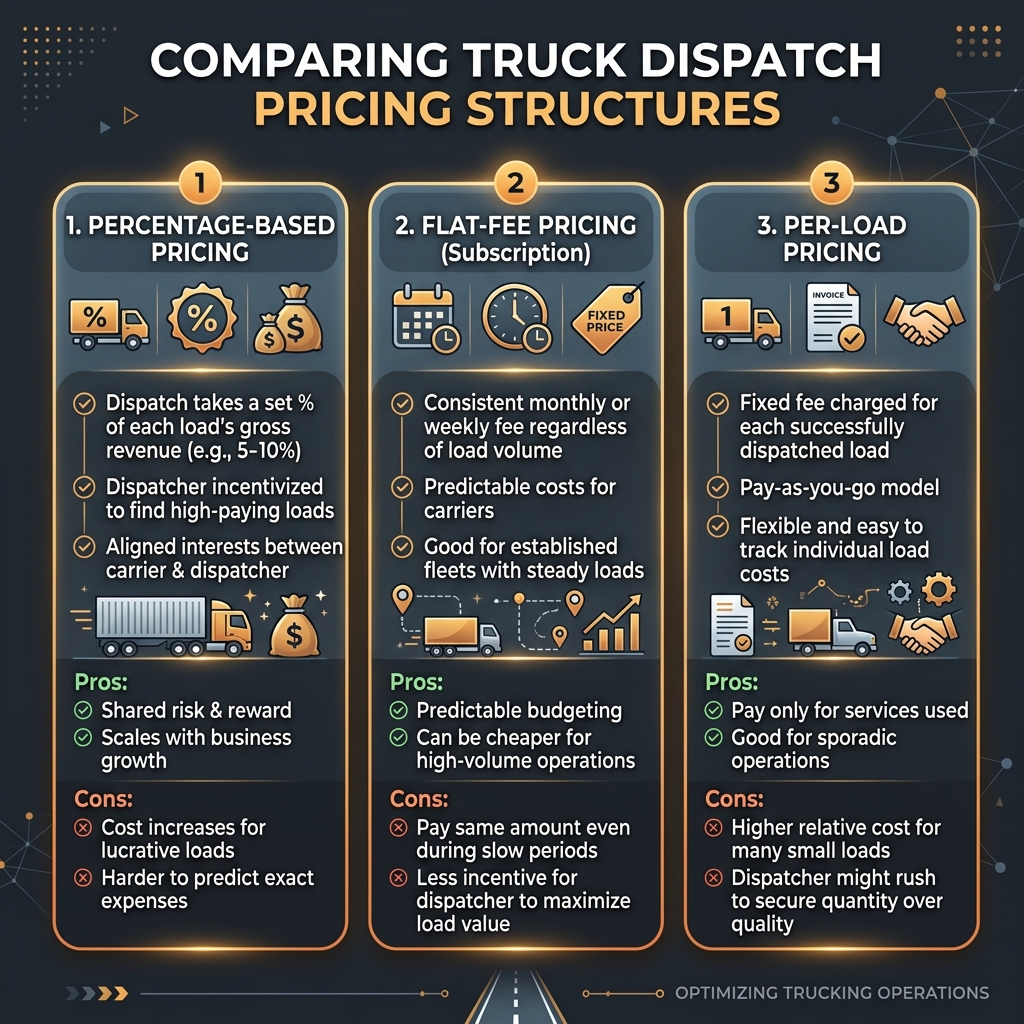
Ask exactly how the fee is calculated. If percentage-based, ask if it applies to gross, linehaul, or accessorials. If flat or per-load, check for setup or tech fees. The correct comparison is what you will actually pay relative to the work being delegated.
For a detailed Texas-specific discussion of dispatch pricing, see Truck Dispatch Service Cost in Texas.
8. Read the Contract Before You Sign
Do not evaluate a dispatch company only through a phone call. Read the actual agreement.
| Contract term | What to verify |
|---|---|
| Fees | Exact amount or calculation method |
| Services | What the dispatcher actually agrees to do |
| Term & Exclusivity | How long the agreement remains active; whether you can book your own loads |
| Cancellation & Notice | How you terminate the relationship; notice period required |
| Load approval & Access | Who has authority to book freight; what business information the dispatcher accesses |
Pay particular attention to the exit process: "If this relationship stops working, exactly how do I end it?" Do not rely on verbal explanations if the written agreement says something different.
9 & 10. Communication expectations & Red Flags
Establish clear communication lines: who handles your truck, backup contacts, and after-hours procedures.
🚩 Red Flags to Watch For:
- • Vague pricing: Do not sign if calculations are not clear.
- • Unexpected charges: Setup fees, technology fees, or cancellation fees.
- • Pressure to sign: Rushing before you can review the agreement.
- • Unnecessary account access: Demanding credentials without explanation.
- • Guaranteed-rate promises: Spot-market conditions change constantly.
A Practical Interview Checklist
- • Do they understand my equipment and freight?
- • Where do they source loads and how do they filter them?
- • Who contacts the broker and who negotiates?
- • Who maintains final load approval?
- • How is the fee calculated (gross vs linehaul)?
- • Will I see complete rate confirmations?
- • How long is the agreement and how do I cancel?
- • Who handles driver updates and communication?
Texas-Specific Questions to Ask a Dispatcher
Texas carriers should also ask how the dispatcher approaches the geographic areas in which they actually operate. Texas has a large and varied transportation network.
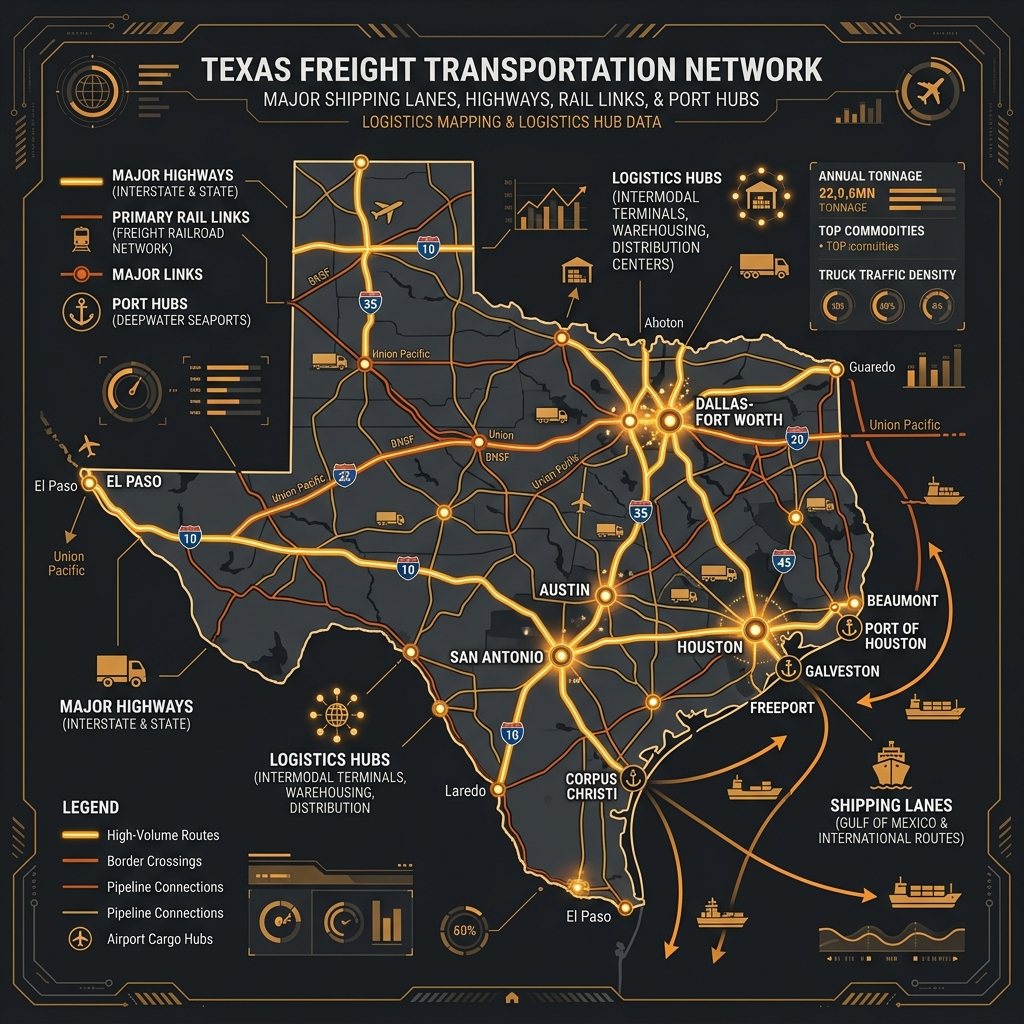
TxDOT's I-35 study covers approximately 590 miles from Oklahoma to Mexico, considering parking, safety, and connectivity. TxDOT's I-10 study likewise considers truck parking, alternative routes, connectivity, and operations.
Ask: "Which Texas lanes and markets do you regularly work with carriers like me?" then explain your actual operating pattern.
For broader information about Texas freight conditions, see the Texas Freight Market Report.
The Final Test: Can You Explain the Relationship Before Signing?
Before choosing a truck dispatch service in Texas, make sure you can explain the relationship in plain language: what they do, what you do, what you pay, and how you cancel. If those questions have clear answers in the written agreement, you have a much stronger basis for making the decision.
If you have already evaluated the service model, pricing, contract, communication process, and carrier-control questions and want to consider Bonafide specifically, you can review Bonafide's truck dispatch service for Texas.
Frequently Asked Questions
What questions should I ask a truck dispatcher before hiring?
Ask about equipment experience, lanes, load sources, broker communication, rate negotiation, broker verification, rate confirmations, paperwork, pricing, contracts, load approval, account access, and communication procedures.
How much should I pay a truck dispatch service?
There is no universal dispatch fee that applies to every provider or carrier. Compare the complete fee calculation and the services included rather than relying on a percentage alone.
Should I choose a dispatcher who specializes in my equipment?
Equipment knowledge can be valuable because different equipment types have different freight requirements. Ask the provider to explain its experience with the equipment and freight you actually operate.
Should I sign a long-term dispatch contract?
Do not judge a contract only by its length. Review the complete agreement, including cancellation, notice, exclusivity, fees, load-approval rights, account access, and other obligations before signing.
Can a dispatcher choose loads for me?
The arrangement depends on the agreement. Ask who identifies loads, who approves them, and whether the dispatcher can book freight without your approval.
How do I know if a dispatch service is legitimate?
Review its actual business role, pricing, contract, communication process, load documentation, and regulatory position. FMCSA guidance on brokers and bona fide agents is an important primary source when evaluating a transportation intermediary.